Why Toasting Spices Changes Their Aroma
Why toasting spices changes their aroma: learn to recognise the shift from raw and dusty to warm and fragrant, without chasing colour or scorching them.
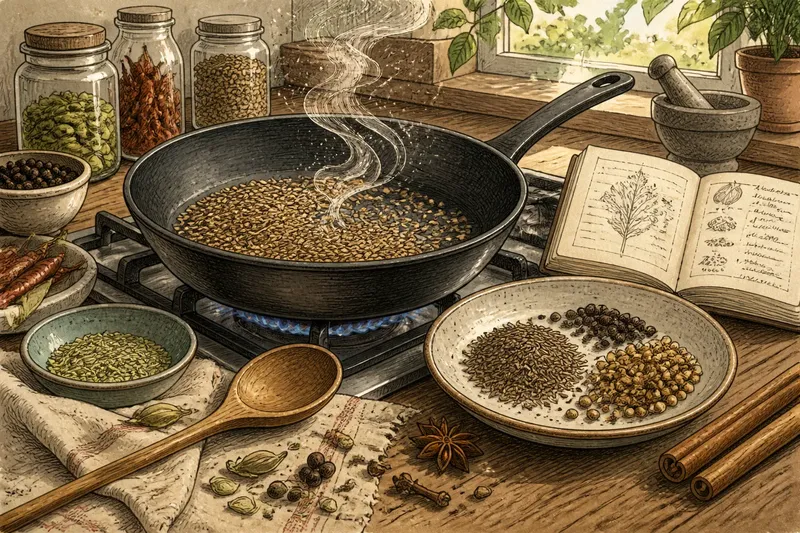
Why toasting spices changes their aroma becomes clear as soon as cumin seeds hit a warm, dry pan: their dusty, earthy smell lifts into something warmer and more distinct. Toasting whole spices is not a race towards brown. The useful change is in the aroma, and it can happen before the seeds look very different.
Dry heat alters volatile compounds, the molecules that readily escape into the air and reach your nose. Heat can release some of them from the spice’s structure, transform others, and drive off moisture that had been muting their scent. The result is not simply “more flavour”. It is a different balance of smells, often easier to notice than to name.
That balance depends on the spice, its age, the pan and the heat. A careful toast brings out character; a careless one can make a spice bitter or flat. Your nose is the most useful guide, with the pan serving as a quiet supporting actor.
What heat releases
A spice’s aroma comes from many compounds, not one signature ingredient. Some are sharp and bright, others woody, resinous, citrus-like or sweet. In a raw seed, those scents may be held within plant tissue or obscured by moisture and less volatile aromas.
As the spice warms, compounds move into the air more readily. A familiar smell can become clearer, while another note may emerge behind it. Coriander seeds, for instance, can shift from dry and faintly citrusy towards a warmer, more rounded fragrance. Mustard seeds may smell more nutty. The point is not to assign every seed a fixed tasting note; it is to notice that heat changes which notes reach you.
Some chemical changes also occur as heat acts on the spice’s natural oils and other constituents. These can create new aromas, while the warm air carries existing volatile compounds out of the pan. Keep heating, and the process continues: fragrant compounds escape, then delicate notes may fade. Beyond that, scorching creates harsh, bitter smells that are not an intensified version of the good ones.
Whole spices are particularly suited to this treatment. Their outer surfaces slow the release of aroma, so brief heating can wake them without exposing as much of the interior as grinding would. Ground spices have far more surface area in contact with the pan. They can go from fragrant to burnt quickly, which makes them better suited to cooking in a moist mixture or adding with close attention.
Why whole spices differ
Seeds, bark, pods and dried buds do not respond alike. Their size, density, oil content and shape affect how quickly heat reaches the aromatic material. A small cumin seed warms faster than a thick piece of cinnamon bark. A cardamom pod protects its seeds; fennel seeds present a different surface and a sweeter scent. One setting on the hob cannot be a reliable instruction for all of them.
Freshness matters, too. An old jar may have lost much of its aroma before it reaches the pan. Heating can make what remains easier to smell, but it cannot restore compounds that have already dissipated. If a spice has little scent when crushed between your fingers, toasting may produce only a faint change.
Moisture complicates the process. A damp spice first spends heat drying, which can delay the aroma shift. A pan with residue or oil is not the same as a dry pan: oil transfers heat differently and can fry the spice rather than toast it. For dry-toasting, use a clean, dry frying pan or small skillet and keep the spices in a single loose layer when practical.
The pan matters in a less dramatic way than the spice. A thin pan responds quickly to changes in heat and can create hot spots. A heavier pan changes temperature more slowly. Either can work; the difference is how closely you need to watch and stir. Treat the pan’s behaviour as part of the process rather than assuming that a recipe’s heat setting has universal meaning.
Listening with your nose
Begin with a small amount of one whole spice, so its aroma is easy to follow. Put it in a dry pan over low to moderate heat. Move the pan or stir the seeds regularly with a wooden spoon, then pause to smell from a safe distance. Do not lean over the pan and inhale deeply; warm vapour can be sharp, and spice dust is no improvement.
At first, the aroma may seem much like the spice in the jar. Then it often becomes clearer and more present. Look for a shift in character: raw to warm, muted to open, or grassy to nutty. There is no need to wait for smoke, visible colour change or dramatic popping. Those are poor substitutes for smelling what is happening.
Say you have cumin seeds for a lentil dish and want to understand the difference between raw and toasted. Imagine setting a small pinch aside before heating, then warming another pinch in a dry pan until its smell turns distinctly warmer. Let the pan cool briefly, and compare the two by rubbing a seed from each between your fingers. The expected observable result is a clearer, fuller aroma from the warmed seeds, not a particular shade of brown.
That small comparison helps separate aroma from expectation. If you already know the spice will be toasted, it is easy to interpret any change as improvement. Smelling the raw and warmed versions side by side gives you something concrete to judge: which scent suits the food you are making?
When colour misleads
Colour can be a clue, but it is not a finish line. Some spices darken quickly; others remain nearly unchanged while their aroma develops. A dark pan can also make a modest colour shift hard to see. Watching for brownness encourages unnecessary heat, and the spice pays for the cook’s preference for visual proof.
Smoke is a warning, not a target. So is a sudden acrid or burnt smell. If either appears, remove the pan from the heat at once. Transfer the spices to a cool plate rather than leaving them in the hot pan, where residual heat can keep cooking them. If the aroma is bitter or charred, it is usually better to discard that batch than try to hide it in the dish.
Movement matters because spices resting against a hot patch warm faster than those on the surface. Stirring or gently shaking the pan redistributes them. It does not make an over-hot pan safe from burning, but it reduces the chance that one spot will take all the heat while the rest of the batch remains pale and raw-smelling.
Once the aroma has shifted, stop. Pour the spices onto a cool plate or into a bowl. Leaving them in the pan lets stored heat continue the work, even after the hob is off. If you will grind them, let them cool first; warm spices can release their aroma into the kitchen instead of keeping it for the food.
Questions about toasting
How can you tell when spices are toasted?
Smell for a clear change from the raw spice’s quieter scent to a warmer, more distinct aroma. Stop when that shift is pleasant and recognisable; visible browning is not required.
Should spices pop in the pan?
Some seeds may crackle or move as they heat, but popping is not a universal signal of readiness. Use aroma as the main cue, since different shapes and moisture levels behave differently.
Can ground spices be toasted dry?
They can, but their exposed surface heats rapidly and can scorch before you have much warning. For most dishes, briefly warming ground spices in a little oil or in a moist cooking base is easier to control.
Why do toasted spices smell weaker later?
Many aromatic compounds escape into the air as spices warm, and further exposure can dull the remaining scent. Toast only what you need for the dish, then store unused whole spices in an airtight container once fully cool.
Choosing a useful finish
Toasting is a choice about the role a spice should play, not a compulsory opening move. A raw or gently warmed spice can suit a fresh, sharp dish; a toasted one may contribute a rounder, more resonant note. The cooking method and the rest of the ingredients decide which is useful.
Whole spices can also be toasted before grinding, which makes their aroma easy to notice when they are crushed. Use a mortar and pestle for a small quantity or a clean spice grinder for a larger one, keeping in mind that the grinder will carry the scent into its next job. Grinding after toasting does not preserve every volatile compound. It simply gives the ground spice a newly exposed surface, so add it to the dish without an unnecessary wait.
There is no universal timing because a pan, a spice and a hob each respond differently. If a recipe gives a cue such as “fragrant”, treat it as a prompt to pay attention, not as a mystery code. Lower the heat if the aroma changes too abruptly; take the pan off if it turns sharp. Labels and manufacturer instructions matter for equipment, and local food-safety guidance applies where storage or handling is concerned.
For why toasting spices changes their aroma, remember the practical distinction: warmth makes some scents more available, while continued heat can drive them away or spoil them. A small batch, a dry pan and a few attentive pauses are enough to learn the difference. Let the aroma decide when to stop; brown seeds have no special authority.