Fresh Herbs: Chop Them Fine or Leave the Leaves Whole?
Fresh herbs, chopped or whole, behave differently in a dish. Choose the right cut for even flavour, visible greenery and a finish that suits the food.
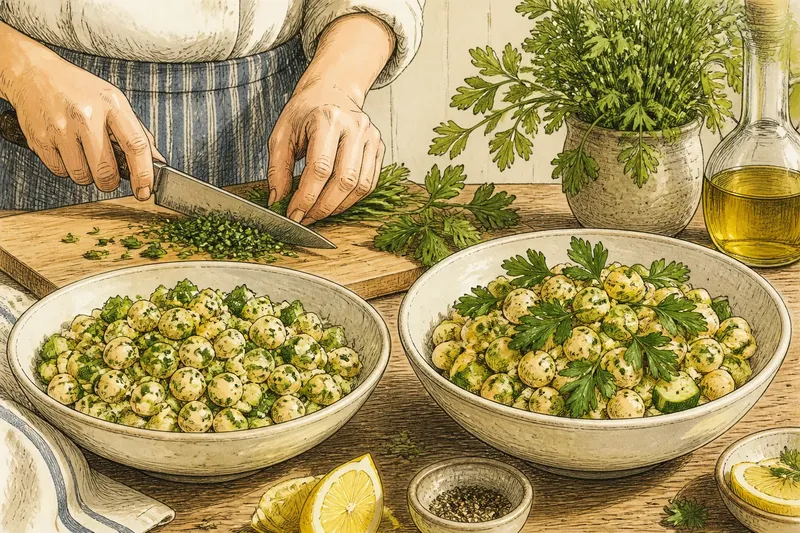
Fresh herbs, chopped or whole, can make the same bowl of soup look finished in two different ways. The cut decides where the herb lands: fine pieces spread through a dish, while intact leaves stay visible and deliver their flavour in distinct bites. Choose according to whether you want herbs woven through the food or noticed as part of its surface.
This is less a question of culinary virtue than of placement. Parsley chopped into a lentil salad becomes part of the seasoning; a few whole leaves on top remain individual accents. The useful choice depends on the dish’s texture, the herb’s shape and when it is added.
For even distribution
Chop herbs when you want a little greenery and flavour in many bites. Fine pieces spread more readily through fillings, dressings, sauces and soft mixtures, rather than clustering wherever a whole leaf happens to fall.
Think of chopped parsley in a savoury yoghurt sauce, dill through potato salad, or chives in scrambled eggs. In each case, small pieces can be stirred into the base and carried along on a spoon or fork. A whole leaf would still taste of the herb, but it might arrive as a separate mouthful rather than a seasoning shared across the dish.
Chopping also suits mixtures where large leaves would interrupt the texture. A spoonful of couscous, a bean salad or an omelette is easier to eat when the herbs are cut to a scale that sits comfortably with the other ingredients. The aim is not powder. Recognisable flecks usually give a more pleasant texture and a clearer visual cue than herbs reduced to a damp paste.
For a cooked sauce or soup, stir chopped tender herbs in near the end if you want their colour and fresh, leafy character to remain apparent. If they go in much earlier, they can soften and become less distinct. That may be suitable for a dish where the herb should blend into the background, but it is not the best route to bright green flecks.
For visible leaves
Leave leaves whole when their shape helps define the dish. A basil leaf on a slice of bread, a coriander leaf on a curry, or mint scattered over a grain bowl gives the eye something to register before the first bite. The herb reads as a deliberate finishing element, not merely a green seasoning.
Whole leaves also preserve small differences in texture. A tender basil leaf can feel soft against ripe fruit or creamy cheese; a sprig of parsley can bring a more pronounced, leafy bite to a plate. In a salad, intact leaves can sit among lettuce and other greens without turning into tiny fragments that are hard to pick out.
Use whole leaves when you want diners to notice and choose them. This can be useful for a shared platter, where people have different preferences, or for a dish with a simple surface that benefits from a clear herbal accent. It is less suited to a thick dip or compact filling, where large leaves may fold, bunch or pull out in one piece.
Whole herbs are not automatically more decorative. A large leaf placed on a small canapé can dominate it, while several leaves scattered carelessly may look like they fell from the chopping board. Keep the leaf size in proportion to the food and place it where it is likely to stay put.
Match the cut to the herb
Soft, tender herbs such as basil, mint, coriander and dill can work either way. Their leaves are often pleasant whole when they are small, or torn into a few pieces when larger. Chopping is useful for spreading them through a mixture; whole leaves suit garnishes and salads where their shape remains part of the presentation.
Parsley is similarly adaptable. Flat-leaf parsley can be chopped for sauces, salads and fillings, or kept in small leaves for a loose garnish. Curly parsley has a more pronounced shape and can look busy when finely chopped, so use it where that texture suits the dish rather than treating it as a direct substitute in every role.
Chives and tarragon are usually easier to distribute when cut. Chives are narrow and can be snipped into short lengths; tarragon leaves have a defined aniseed character that can become assertive if a large leaf lands alone. A light chop helps share their flavour across a dish. For a visible garnish, use a restrained scattering rather than a dense cap.
For woody herbs such as rosemary and thyme, the choice is not simply fine chop or whole leaf. Their stems and leaf textures call for more care. Strip thyme leaves from the stem where appropriate, and chop rosemary finely enough that it does not leave tough, needle-like pieces in a soft filling. Some dishes benefit from a whole sprig during cooking, which can be removed before serving; that is a different job from adding leaves as a garnish.
For dressing and finishing
In a dressing, chopped herbs distribute through the liquid and cling to ingredients more evenly. This works well for a vinaigrette, salsa verde or a yoghurt-based sauce. If you want a clean, glossy dressing with visible individual leaves, keep some leaves whole and fold them in gently at the end instead.
For a warm dish, consider whether the herbs should season the interior or mark the surface. Chopped parsley stirred into buttered beans becomes part of the food. Whole leaves added just before serving remain easy to see and can be picked up with the beans. Both approaches are sound; they simply answer different questions.
Imagine you are making a bowl of chickpeas with lemon, olive oil and chopped cucumber. If you want parsley in every forkful, chop it and mix it through the dressing before tossing. If the bowl should look spare and the parsley should read as a fresh accent, leave a few small leaves whole and scatter them over the top just before serving. The first choice distributes; the second gives the eye a focal point.
For a shared dish, a useful compromise is to mix chopped herbs through the base, then add a modest number of whole leaves on top. The chopped portion supplies an even background, while the leaves show what has been added. Keep the garnish distinct rather than doubling the quantity until the surface resembles a small hedge.
How should you cut them?
Should herbs be chopped with a sharp knife?
A sharp kitchen knife makes clean cuts and gives you control over the size of the pieces. A blunt blade tends to press and bruise soft leaves, which can leave them looking crushed rather than neatly chopped.
Can you tear herbs instead?
Yes. Tearing suits larger, tender leaves when you want visible pieces without a precise, fine cut. Use clean hands and keep the pieces close to the scale of the food, so they are easy to eat.
When should herbs go into a hot dish?
Add tender chopped herbs near the end when you want their fresh colour and distinct flavour to remain noticeable. A woody sprig added earlier can season a dish during cooking, then be removed before it is served.
Should every herb be chopped finely?
No. Fine chopping is useful for even distribution, but it can make a garnish look dense and can blur the identity of a herb. Choose a cut that suits the texture of the dish and the visual effect you want.
Choose by the result
Use a fine chop for sauces, fillings and soft mixtures where herbs should be spread from bite to bite. Use a rough chop or torn leaves when the food can accommodate visible pieces but would not benefit from a whole leaf. Keep leaves intact when their shape, colour or separate texture is part of the presentation.
There is also room to change the cut within one dish. A chopped herb mixed into a dressing can season the ingredients, while a few whole leaves placed on top make the finish legible. For fresh herbs, chopped or whole is not a contest between correct and incorrect; it is a choice about how the herb should travel from plate to palate.
Before reaching for the knife, look at the food on the plate and decide where you want the herb to appear. If the answer is everywhere, chop. If the answer is here and there, leave the leaves whole. That small decision often does more for the dish than an elaborate garnish.