A Late-Summer Supper Built Around Ripe Tomatoes
Plan a late-summer supper around ripe tomatoes, with a fresh centrepiece, a simple accompaniment and a relaxed sequence for serving guests.
How do you build a late-summer supper around ripe tomatoes without turning the evening into a kitchen shift? Start with the tomatoes, choose one fresh dish that lets them lead, then add a simple accompaniment that can wait while people arrive. The meal should feel generous, not over-engineered.
This approach suits a warm evening when the tomatoes are fragrant and yielding, and the table can be set outside or near an open window. It also leaves room for whatever looks good at the market: small sweet tomatoes, broad slicing varieties, or a mixed bowl from a neighbour’s garden. The point is not to make every component tomato-flavoured. It is to give the fruit a clear place at the centre.
Choose the tomatoes
Begin by deciding how the tomatoes will be served. For a shared platter, choose a mix of shapes and colours, including some firm enough to slice neatly and some very ripe ones that will release plenty of juice. Cherry tomatoes can be left whole or halved. Larger tomatoes are easier to arrange in broad slices or wedges.
Look for fruit that smells distinctly tomato-like near the stem and gives slightly under gentle pressure. Avoid relying on colour alone; some varieties stay green or develop uneven patches when ripe. If the tomatoes are chilled, let them come closer to room temperature before serving. Cold dulls their aroma and can make their texture seem firmer than it is.
Work out roughly how much to buy by considering the rest of the table and the number of people, rather than treating the tomatoes as a fixed portion. If they are the main fresh dish, allow them to occupy a generous serving platter. If there will also be a substantial salad or vegetables, a smaller bowl may be enough. Leave a few whole tomatoes aside in case the first selection has a bruised or watery one.
Set the menu
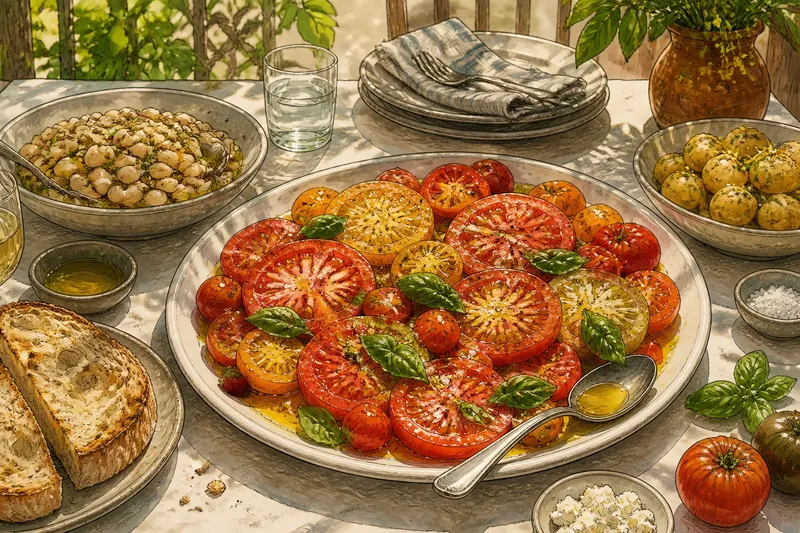
Keep the menu to three roles: a tomato dish, an accompaniment, and something small to finish the meal. The tomato dish might be a platter with olive oil, flaky salt, black pepper and torn basil. A little red-wine vinegar or lemon can sharpen the juices, but taste first; ripe fruit may need no extra acidity.
For an accompaniment, choose something that catches the tomato juices or gives the meal a more substantial centre. Thick slices of grilled sourdough work well, as do boiled new potatoes dressed with olive oil and parsley, or a bowl of white beans with garlic and lemon. Pick one. A table with bread, potatoes, beans, cheese, corn and two salads is not necessarily more hospitable. It is certainly more washing up.
For a simple finish, serve ripe peaches, plums or nectarines, perhaps with plain yoghurt or a little soft cheese. Keep dessert separate from the tomato preparations so the flavours remain distinct. If guests are bringing food, ask for one defined contribution, such as fruit or a bottle of sparkling water, rather than inviting a second version of every dish.
Plan the serving order
Decide what can be done before the guests arrive and what needs a last-minute touch. Set out plates, cutlery, serving spoons, water glasses and napkins early. Put the bread or potatoes on a serving dish, and keep their dressing nearby if they are better dressed just before serving. Wash basil and dry it gently; wet leaves can leave droplets across the platter.
Slice tomatoes close to serving time. Salt draws out liquid, which is useful for flavour but can make a platter look pooled if it sits for too long. Arrange the slices on a shallow dish, season them, and add oil shortly before the meal. Scatter basil at the end so the leaves stay bright and easy to recognise.
If the gathering begins outdoors, keep food shaded and bring only what people are likely to eat soon to the table. Return remaining food to suitable storage rather than leaving it sitting out for the evening. Follow the food label and local food-safety guidance where handling or storage requirements apply.
Prepare the fresh dish
Use a wide platter rather than a deep bowl for sliced tomatoes. A shallow surface lets the fruit sit in one layer, so the seasoning reaches more of it and guests can lift a portion without excavating. Alternate colours or shapes loosely; precise patterns are unnecessary, though a little space between pieces makes the dish easier to serve.
Season in stages. Add a modest pinch of salt, taste one slice, then decide whether the platter needs more. Add freshly ground black pepper and a thread of good olive oil. If the tomatoes taste sweet but flat, add a small splash of vinegar or lemon juice. If they taste bright already, leave it out. Finish with basil, mint or flat-leaf parsley, choosing one herb rather than making the platter a leaf collection.
Put a spoon beside the platter. The tomato juices mingle with oil and seasoning, and some guests will want to spoon them over bread or potatoes. A small dish of grated hard cheese or crumbled feta can sit nearby, but keep it optional. The tomatoes should still taste like tomatoes.
Choose a simple partner
Match the accompaniment to the practical needs of the table. Bread is the least demanding option: slice a country loaf, toast it if convenient, and set out olive oil or softened butter. It gives people something to eat while the rest of the meal is served and makes good use of the platter juices.
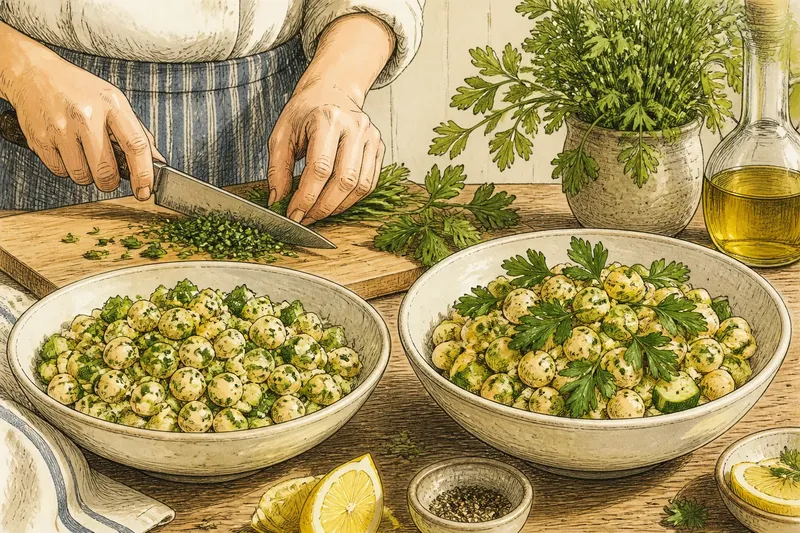
New potatoes suit a more substantial supper. Boil them until tender, drain them well, then toss with olive oil, salt, chopped parsley and a little lemon zest. They can be served warm or at room temperature. For a no-cook alternative, open a tin of cannellini beans, rinse and drain them, then dress with olive oil, lemon juice, finely chopped garlic and parsley. Taste before adding salt; canned beans vary.
Imagine you have invited a few friends after work and the tomatoes are ripe but uneven in size. You choose a shallow platter, slice the largest fruit, halve the smaller ones, and dress a bowl of cannellini beans while they drain. The beans can be ready before anyone arrives; just before serving, you add oil and lemon to the tomatoes. The result is a meal with contrasting textures and enough substance, without a queue forming around the hob.
What should you serve?
What goes well with ripe tomatoes?
Good bread, new potatoes and white beans all suit ripe tomatoes because they take up the seasoned juices without competing with the fruit. Choose one according to how filling you want the meal to be.
Can tomatoes be prepared ahead?
You can wash and dry them ahead, and prepare the serving platter and other ingredients in advance. Slice and season close to serving so the texture stays appealing and the plate does not fill with juice.
Which herbs work best?
Basil is the familiar choice, while mint brings a cooler note and flat-leaf parsley is mild and practical. Use one herb at a time, then taste before adding extra seasoning.
How do you make the meal more substantial?
Add bread, potatoes or beans rather than multiplying the number of side dishes. If guests have particular dietary needs, ask in advance and adapt the accompaniment so everyone has something suitable.
Keep the table relaxed
Serve the tomato platter in the middle of the table with the accompaniment close by, then let people help themselves. Put salt, pepper and a small bottle of olive oil within reach, but resist the urge to keep adjusting the dish after it has been served. A ripe tomato does not need a committee.
Clear a little space for the juices and used plates, and keep extra bread nearby if the platter is disappearing quickly. If some tomatoes remain, fold them into a next-day lunch with beans or toast, once they have been stored appropriately. For a late-summer supper, the useful measure of success is simple: guests have eaten well, the tomatoes have been allowed to taste of themselves, and the cook has spent more time at the table than beside the sink.